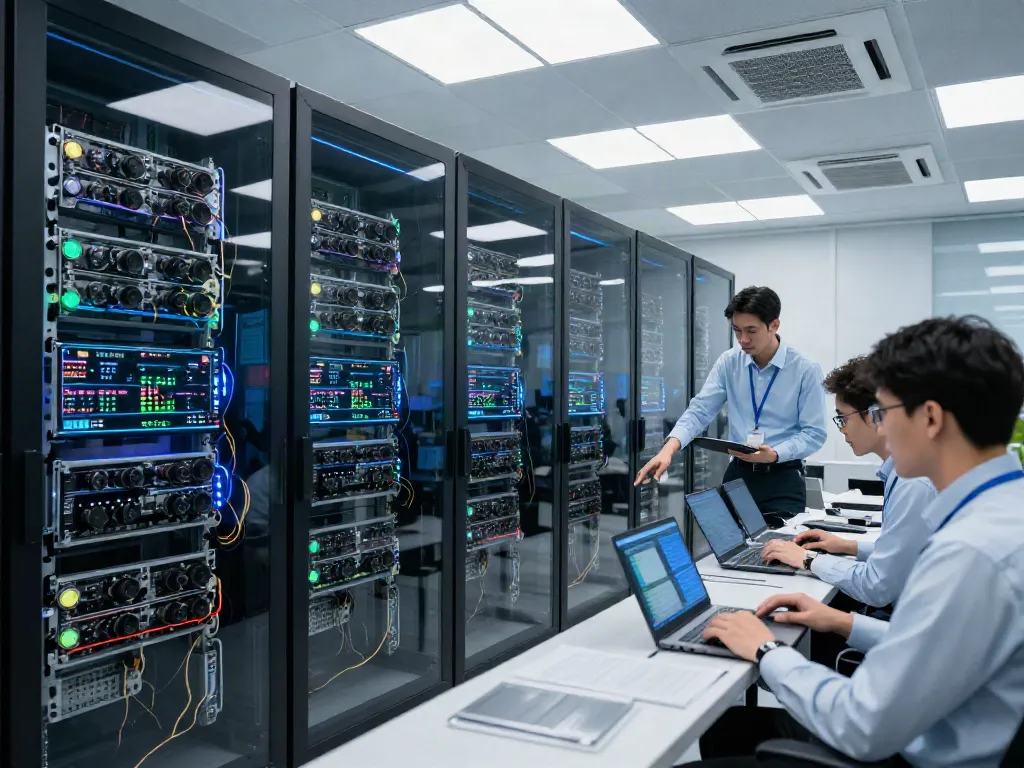
Understanding GPU Computing
In today's rapidly evolving technological landscape, GPU computing has emerged as a critical element in processing vast amounts of data efficiently. As organizations increasingly rely on artificial intelligence (AI), the demand for powerful computing resources has surged. Graphics Processing Units (GPUs) have transformed from their original purpose of rendering graphics to becoming indispensable tools for data-heavy applications such as machine learning, deep learning, and big data analytics.
What is GPU Computing?
GPU computing refers to the use of a GPU alongside a CPU (Central Processing Unit) to perform complex computations more efficiently. By harnessing the parallel processing capabilities of GPUs, which can execute thousands of threads simultaneously, organizations can significantly accelerate their computational tasks. This parallelization is particularly beneficial for applications requiring intensive calculations, such as neural network training or real-time data processing.
How GPU Computing Differs from CPU
While CPUs are designed for sequential processing and can handle a wide variety of tasks, GPUs excel in parallel processing. A typical CPU may have a few cores optimized for single-threaded performance, whereas GPUs contain thousands of smaller, efficient cores tailored for executing multiple tasks simultaneously. This fundamental difference allows for GPU computing to outperform CPUs in specific applications, particularly those involving massive datasets where numerous computations can occur in parallel.
Importance of GPU in AI Infrastructure
In the realm of AI infrastructure, GPUs play a pivotal role by enabling faster training of deep learning models and facilitating real-time inference. Their architecture suits the nature of AI workloads, which often involve extensive matrix operations and vector calculations. Companies leveraging GPU computing can gain a competitive edge by reducing the time required to deploy AI models and improving the accuracy of predictions.
Powering AI with GPU Computing
As AI technologies continue to evolve, the electricity needs for GPU operations are becoming increasingly significant. The capacity to provide reliable and scalable power is crucial for supporting AI factory operations and ensuring that GPU resources are utilized effectively.
Electricity Needs for GPU Operations
GPU operations require substantial electrical power, especially when handling large-scale computations. Data centers housing AI applications must ensure adequate power supply and cooling systems to maintain optimal performance and prevent overheating. Power efficiency initiatives and renewable energy sources are gaining traction as organizations seek to balance operational costs with sustainability goals.
Contribution Plans for Supporting AI Factories
Various contribution plans are designed to enable individuals and organizations to support AI factories by investing in the electricity and computing resources necessary for GPU operations. Participants can choose from a range of power plans that suit their operational needs, helping to foster a collaborative ecosystem in the AI Token Economy.
Real-world Applications of GPU Computing in AI
GPU computing has a wide range of real-world applications, from autonomous vehicles to medical diagnostics. In autonomous driving, for instance, GPUs process vast amounts of sensor data in real-time, making split-second decisions that keep passengers safe. In healthcare, machine learning models powered by GPUs can analyze medical images rapidly, aiding in early diagnosis and treatment planning.
Benefits of Participating in the AI Token Economy
The AI Token Economy presents unique opportunities for individuals and businesses looking to engage with AI technologies. By understanding how AI tokens interact with GPU computing, participants can optimize their contributions and rewards.
How AI Tokens Work with GPU Computing
AI tokens serve as a unit of measurement for computational resources used in AI models, akin to how kilowatt-hours measure electricity. Each request to an AI model is broken down into input tokens, processed by GPUs, and returned as output tokens. This token-based mechanism allows participants to track their contributions and measure the value generated from their power support.
Incentives for Individual Participants
Individuals participating in the AI Token Economy can receive rewards based on their contributions to GPU resources and the performance of AI workloads. These incentives create a symbiotic relationship between power providers and AI service operators, enhancing the overall efficiency of the ecosystem.
Challenges and Risks in Token-Based Models
Despite the advantages, participating in token-based models comes with its challenges. Fluctuations in demand for GPU resources, changing electricity tariffs, and the complexity of managing operational costs can impact potential returns. Participants must be aware of these risks and conduct thorough research before committing to any contribution plan.
Strategies for Effective GPU Resource Management
To maximize the benefits of GPU computing, organizations need to implement robust resource management strategies that optimize both performance and cost.
Load Balancing in GPU Operations
Load balancing is essential in GPU operations to ensure that computational tasks are evenly distributed across available resources. This approach minimizes bottlenecks and enhances overall system performance, allowing for more efficient processing of AI workloads.
Maximizing Power Efficiency
Implementing strategies to maximize power efficiency is crucial for organizations seeking to reduce operational costs. Technologies such as dynamic voltage and frequency scaling (DVFS) can optimize power consumption based on workload demands, ensuring that GPUs operate only at the power levels necessary for their tasks.
Monitoring and Analytics for Performance Improvement
Continuous monitoring and analytics are integral to improving GPU performance in AI applications. By analyzing performance metrics, organizations can identify areas for optimization and fine-tune their systems to achieve faster processing times and reduced energy consumption.
The Future of GPU Computing in AI
As we look ahead to 2026 and beyond, GPU computing is poised to play a transformative role in the future of AI infrastructure.
Emerging Trends in 2026 and Beyond
Emerging trends suggest that GPU computing will increasingly incorporate advanced technologies such as quantum computing and neuromorphic chips. These innovations promise to enhance processing capabilities further, paving the way for more sophisticated AI applications and broader adoption across industries.
Collaborative Approaches to AI Infrastructure
Collaboration among power providers, AI developers, and individual participants will be essential in creating a sustainable AI infrastructure. By working together, stakeholders can share best practices, optimize resource allocation, and collectively address challenges facing the industry.
Predictions for the Evolution of GPU Technologies
The evolution of GPU technologies is likely to focus on increasing efficiency and performance while reducing energy consumption. Future GPUs may leverage artificial intelligence itself to optimize their operations, enabling them to allocate resources dynamically based on real-time demands.
What are the key benefits of GPU computing?
The key benefits of GPU computing include accelerated processing speeds, enhanced parallel processing capabilities, and improved energy efficiency. These advantages enable organizations to complete complex computations more quickly and cost-effectively, making GPU computing a valuable asset in AI-related tasks.
How does GPU computing support AI models?
GPU computing supports AI models by providing the computational power necessary to process large datasets and perform complex computations rapidly. This capability is crucial for tasks like training and inference in machine learning and deep learning applications, where time and efficiency are critical.
What challenges do users face with GPU computing?
Users of GPU computing may face challenges such as high initial costs for hardware, the need for specialized knowledge to optimize GPU performance, and the complexities of scaling operations as demand increases. Understanding these challenges is essential for successful implementation.
How can I choose the right GPU plan?
Choosing the right GPU plan involves assessing your operational needs, understanding the types of AI workloads you intend to support, and evaluating the associated costs. By carefully considering these factors, you can select a plan that aligns with your goals and maximizes your contributions to the AI ecosystem.
What are the costs associated with GPU computing?
Costs associated with GPU computing include hardware expenses, electricity rates, and maintenance fees. Organizations must account for these expenses when budgeting for their AI initiatives to ensure they achieve a favorable return on investment.