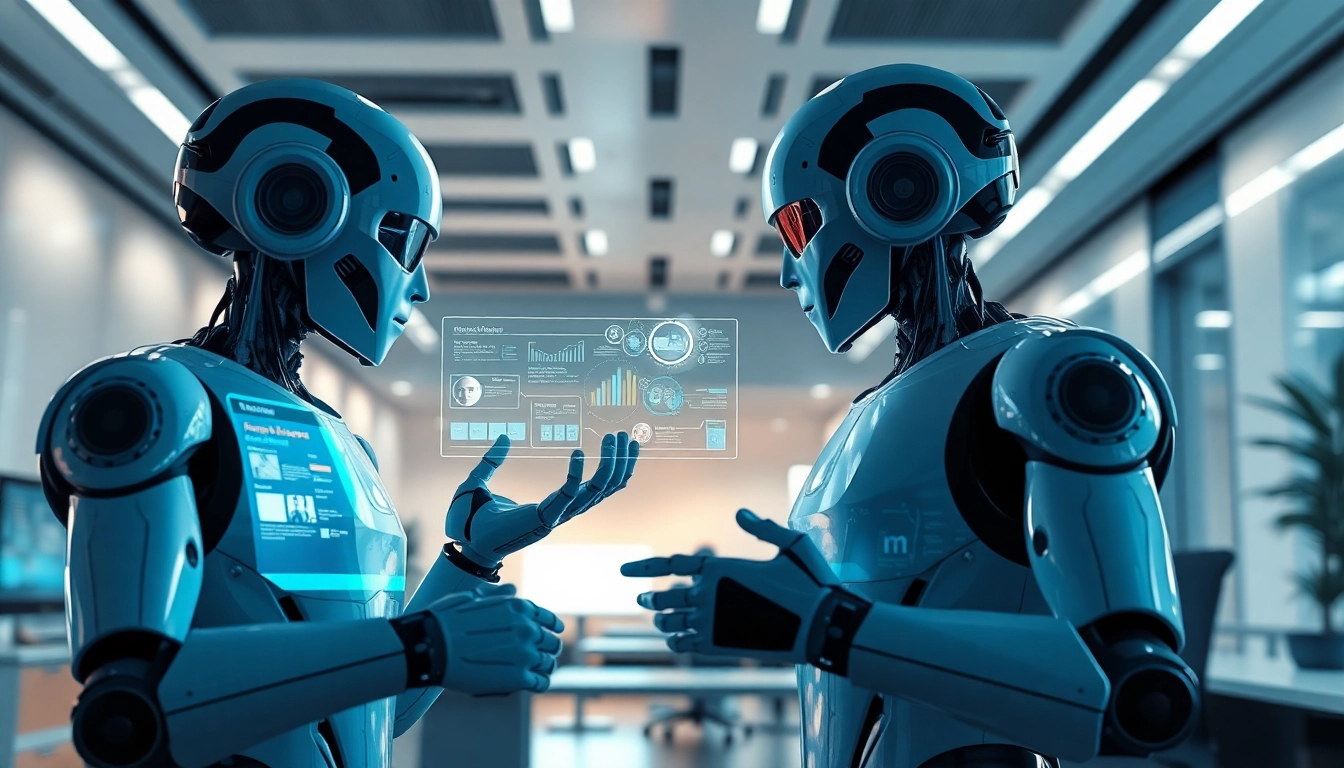
Introduction to Ai agents
The advent of Ai agents is reshaping how humans interact with technology. These intelligent systems are designed to perform tasks autonomously, adjusting and learning in response to their environment. As we delve deeper into the world of Ai agents, it becomes essential to understand their framework, evolution, and critical role in various sectors.
What Are Ai agents?
Ai agents are essentially software systems equipped with artificial intelligence capabilities that enable them to understand contextual information, make decisions, and take actions autonomously. Unlike traditional software that operates under strict programming constraints, Ai agents utilize machine learning algorithms to learn from data and history, thereby enhancing their decision-making processes over time. These agents can perceive their surroundings, deliberate on possible actions, and execute tasks with minimal human intervention.
Historical Context and Development
The concept of intelligent agents dates back to the early developments in artificial intelligence during the mid-20th century. Initial efforts focused on rule-based systems that could operate only under predefined conditions. With the rise of machine learning and neural networks in the 1980s and 1990s, the capabilities of these agents expanded significantly. The introduction of advanced algorithms facilitated the development of agents capable of learning from past experiences, thus leading to the sophisticated Ai agents we see today. From simple reactive agents to complex deliberative models, the evolution of Ai agents continues to be a testament to technological advancement.
Importance of Ai agents in Modern Technology
In today’s digital landscape, Ai agents play a transformative role across various sectors. They are integral in automating processes, enhancing operational efficiency, and providing predictive insights. As businesses adopt these technologies, the benefits become evident in improved customer engagement, streamlined workflows, and data-driven decision-making. Understanding the importance of Ai agents is fundamental to leveraging their capabilities effectively.
Types of Ai agents
Reactive Ai agents Explained
Reactive Ai agents operate based on current inputs without the ability to form memories or use past experiences to shape their actions. These agents are programmed to respond to specific stimuli, making them suitable for environments where tasks are straightforward and don’t require historical context. For example, a simple chatbot that provides responses based on keyword detection without remembering previous interactions exemplifies a reactive Ai agent.
Deliberative Ai agents Overview
In contrast, deliberative Ai agents incorporate planning and reasoning capabilities, allowing them to assess situations, formulate strategies, and make informed decisions. These agents take past experiences and contextual variables into account to optimize their actions. For instance, a personal assistant Ai agent that schedules meetings, considers travel time, and previous engagements would be classified as deliberative, as it intelligently navigates through tasks by considering various outcomes.
Combination of Ai agents
Hybrid or combined Ai agents leverage the strengths of both reactive and deliberative approaches. By integrating immediate response abilities with planning and learning functions, these agents can adapt to dynamic environments. This combination allows them to handle complex tasks effectively and provide comprehensive solutions, such as in automated customer service systems where real-time responses are necessary, paired with personalized interactions based on historical data.
Applications of Ai agents Across Industries
Ai agents in Business Operations
Business sectors have witnessed significant transformations due to the integration of Ai agents in their operational frameworks. Automated Ai agents are employed in areas such as inventory management, data analysis, and customer relationship management. They process vast amounts of information swiftly, aiding decision-makers in optimizing their strategies. As a result, organizations that deploy Ai agents report enhanced productivity, quicker turnaround times, and lowered operational costs.
How Ai agents Enhance Customer Experience
Enhancing customer experiences is paramount for business success, and Ai agents are at the forefront of this evolution. They provide personalized recommendations, resolve complaints efficiently, and maintain consistent communication across multiple channels. For example, e-commerce platforms utilize Ai agents to analyze customers' purchasing patterns, offering tailored product suggestions that elevate user engagement and satisfaction.
Innovations Driven by Ai agents in Healthcare
The healthcare sector has embraced Ai agents to streamline operations and improve patient outcomes. These agents assist in diagnostic processes, patient monitoring, and predictive analytics. For instance, Ai agents can analyze medical imaging data, helping radiologists identify anomalies faster and more accurately. Additionally, virtual health assistants enable patients to schedule appointments effortlessly, receive medication reminders, and gather information about their health conditions, confirming the vital role of Ai agents in improving healthcare delivery.
Benefits of Implementing Ai agents
Increased Efficiency and Productivity
One of the standout benefits of Ai agents is their ability to enhance organizational efficiency. By automating routine tasks, these agents free up human resources, allowing employees to focus on higher-value activities. This reallocation of effort leads to improved productivity and a more innovative work environment, as teams engage in strategic initiatives rather than day-to-day operational tasks.
Cost Reduction with Ai agents
Implementing Ai agents can significantly reduce operational costs. By minimizing manual labor, decreasing error rates, and optimizing resource utilization, companies often experience smoother operations and reduced expenditure. The initial investment in Ai technology is generally offset by these long-term savings, making it a prudent decision for forward-thinking organizations.
Continuous Learning and Adaptability of Ai agents
Another advantage of Ai agents is their continuous learning capabilities, which enable them to adapt to changing environments and evolving user needs. By employing machine learning algorithms, these agents can refine their operations based on feedback and new data over time. This ability to adapt not only improves performance but also ensures that the agents provide ongoing value to users and organizations alike.
Challenges and Future of Ai agents
Ethical Considerations in Ai agents Development
As the deployment of Ai agents becomes increasingly widespread, addressing ethical considerations is paramount. Concerns about privacy, data security, and job displacement must be tackled head-on. Developers need to prioritize creating transparent systems that adhere to ethical standards and societal norms, ensuring that the deployment of Ai agents fosters trust and accountability among users.
Addressing Security Concerns with Ai agents
Security issues also represent a significant challenge in the context of Ai agents. As these systems process sensitive data, the risk of breaches increases. Organizations must invest in robust security frameworks to protect data integrity and enhance user confidence. Regular audits, updates, and transparent communication about security measures can mitigate these risks effectively.
Future Trends in Ai agents Technology
The future of Ai agents is bright, with advancements promising even greater capabilities and applications. Trends such as enhanced natural language processing, improved integration with IoT devices, and the progressive development of autonomous systems will shape the landscape of Ai agents. As technology evolves, businesses must stay ahead by continuously adapting their strategies to harness the full potential of emerging Ai technologies.
Frequently Asked Questions
What is an Ai agent?
An Ai agent is a software system that autonomously performs tasks and makes decisions based on its environment, using algorithms to achieve specific goals.
What industries use Ai agents?
Industries such as finance, healthcare, and retail utilize Ai agents to enhance customer service, automate processes, and provide data-driven insights.
How do Ai agents learn?
Ai agents learn through machine learning techniques, continuously improving their performance by analyzing patterns and adapting based on new data.
What are the different types of Ai agents?
There are mainly three types of Ai agents: reactive, deliberative, and hybrid agents, each varying in complexity and functionality.
What are the benefits of Ai agents?
Benefits of Ai agents include increased efficiency, cost savings, improved decision-making, and the ability to perform repetitive tasks without human intervention.